Introduction
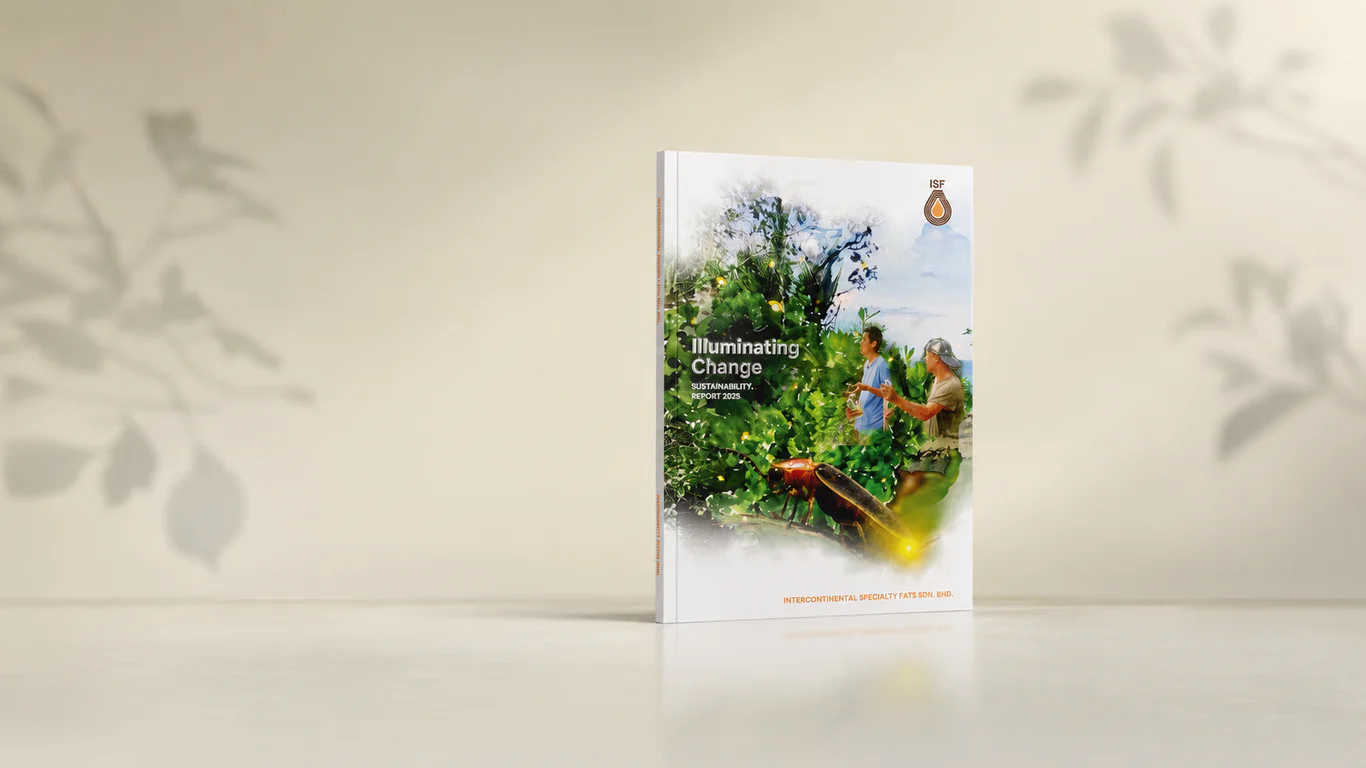
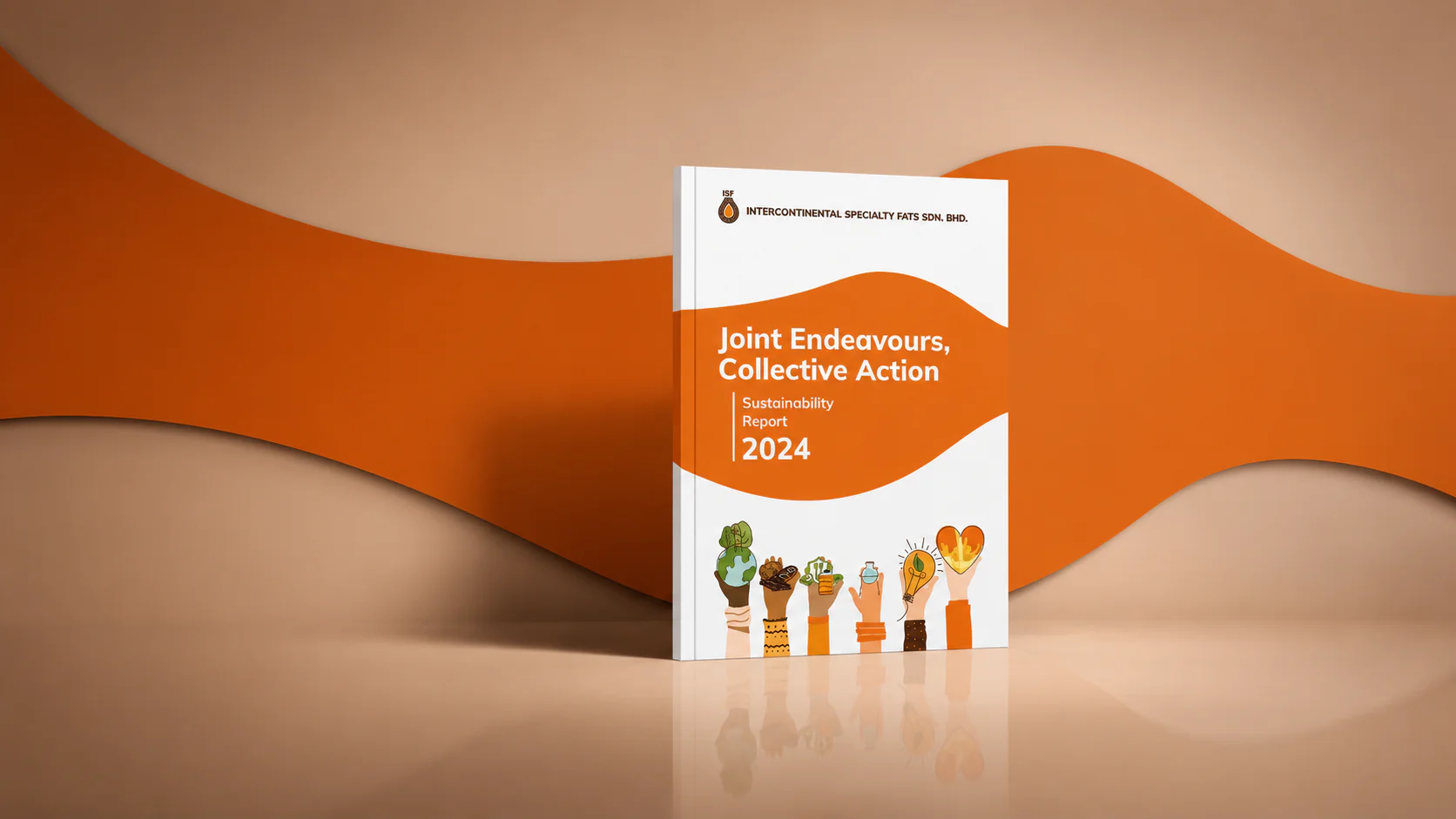
Intercontinental Specialty Fats is a palm oil and specialty fats manufacturer based in Malaysia, providing processed fats and oils for the food, confectionery and personal care industries. Walk Production was engaged to design and produce its 2024 Sustainability Report, built around the theme of joint endeavours and collective industry action.
The publication, themed ‘Joint Endeavours, Collective Action’, documents how ISF works alongside industry partners and supply chain participants to advance change across the palm oil sector. The project built on the design relationship established through previous ISF sustainability reports while introducing a fresh visual identity for the new thematic direction.
Our Solutions
Thematic concept and narrative approach
The ‘Joint Endeavours, Collective Action’ concept shifted the report’s perspective from a purely company-focused narrative to one that acknowledges the wider ecosystem of partners involved. We built a visual language around interconnection, with overlapping forms, shared colour palettes between sections, and collaborative imagery reinforcing the partnership theme throughout the publication.
Content was organised to show how ISF’s individual initiatives connect to wider industry movements. Each section links company-level actions to sector-wide goals. The narrative gives the report a contextual depth that standalone performance data alone cannot achieve, and positions ISF within the broader sustainability conversation.
Graphic design and data visualisation
The edition’s design identity departed from previous reports through layered visual elements that signal collective effort. Colour choices drew from natural references, including greens, ambers and warm neutrals. These create a visual connection to ISF’s agricultural supply chain roots while keeping a contemporary feel.
Performance data was presented through custom visualisations that include partnership attribution where relevant. Charts show not just what was achieved but who contributed. Comparative graphics tracking multi-year progress provide stakeholders with trend data that supports informed assessment of ISF’s sustainability trajectory.
Print services and project coordination
Print production for this report included paper stock selection, colour proofing and quality assurance across the full print run. The print coordination process verified colour accuracy for both photographic content and data visualisation elements. Final checks confirmed that all printed materials matched the approved digital proofs before distribution.
The project involved contributions from ISF’s internal sustainability team, external advisors and supply chain partners featured in case studies. Managing inputs from multiple sources required a structured project management approach. Clear deadlines and consolidated feedback kept the project on schedule despite the number of contributing stakeholders.
The Results
The sustainability report gives ISF’s stakeholders a detailed account of the company’s collaborative sustainability work. The partnership-focused narrative differentiates this edition from conventional single-company ESG reports and adds depth to the company’s disclosure.
The report connects ISF’s performance to broader industry action. The approach strengthens the company’s credibility as an engaged participant in the collective effort to improve sustainability standards across the palm oil value chain.
Related Questions
What does ‘Joint Endeavours, Collective Action’ mean for ISF?
The theme reflects ISF’s position that sustainability progress in the palm oil sector requires collaboration across the value chain. Presenting the company’s progress in isolation was not the aim: the report frames the year around how ISF works with suppliers, industry peers and other stakeholders to achieve shared environmental and social goals.
Why did the ISF report change its visual identity from previous editions?
Each ISF edition matches its theme. ‘Joint Endeavours, Collective Action’ is a different read from earlier themes, so the visual language was rebuilt around interconnection: layered visual elements, overlapping forms and a colour palette of greens, ambers and warm neutrals. The structural conventions and data visualisation standards stayed consistent so regular readers can navigate the report intuitively despite the updated design.
How does the ISF report present partnership and collaboration data?
Performance data includes partnership attribution where relevant. Charts show not just what was achieved but who contributed across the value chain. Comparative graphics track multi-year progress, and case study panels feature supply chain partners. The data layer carries the partnership theme into the figures, not a theme left on the cover alone.
What sits inside the ISF report production scope?
Conceptual development, graphic and layout design, data visualisation, printing services and project management. The scope runs end-to-end, including coordination across ISF’s internal sustainability team, external advisors and supply chain partners contributing case studies. Walk Production carries the multi-stakeholder coordination so the publication ships on the reporting calendar.
How often does ISF publish a sustainability report?
Annually, aligned with the company’s reporting cycle, often as part of a broader annual report design programme. Each edition takes its own theme. The structural conventions stay consistent across editions so the year-on-year reading carries forward, while the visual identity is refreshed to match the year’s narrative.