Video transcript
A company gets a video quote It pictures the shoot day, says yes Then the budget runs over And nobody is sure why Part one The problem The quote hides almost everything Not one creative choice Around 40 small ones
Most made before the camera rolls Three phases Pre-production: the planning Production: the shoot Post-production: the edit Skip planning and fixes cost more Part two The answer The planning decides the price
Pre-production runs 1 to 4 weeks It locks brief, script, shot list Plus location and approvals Brief, shot list, approvals defined Gaps become expensive surprises A deferred decision costs the most A 90-second video is only ~190 to 225 words Write past that
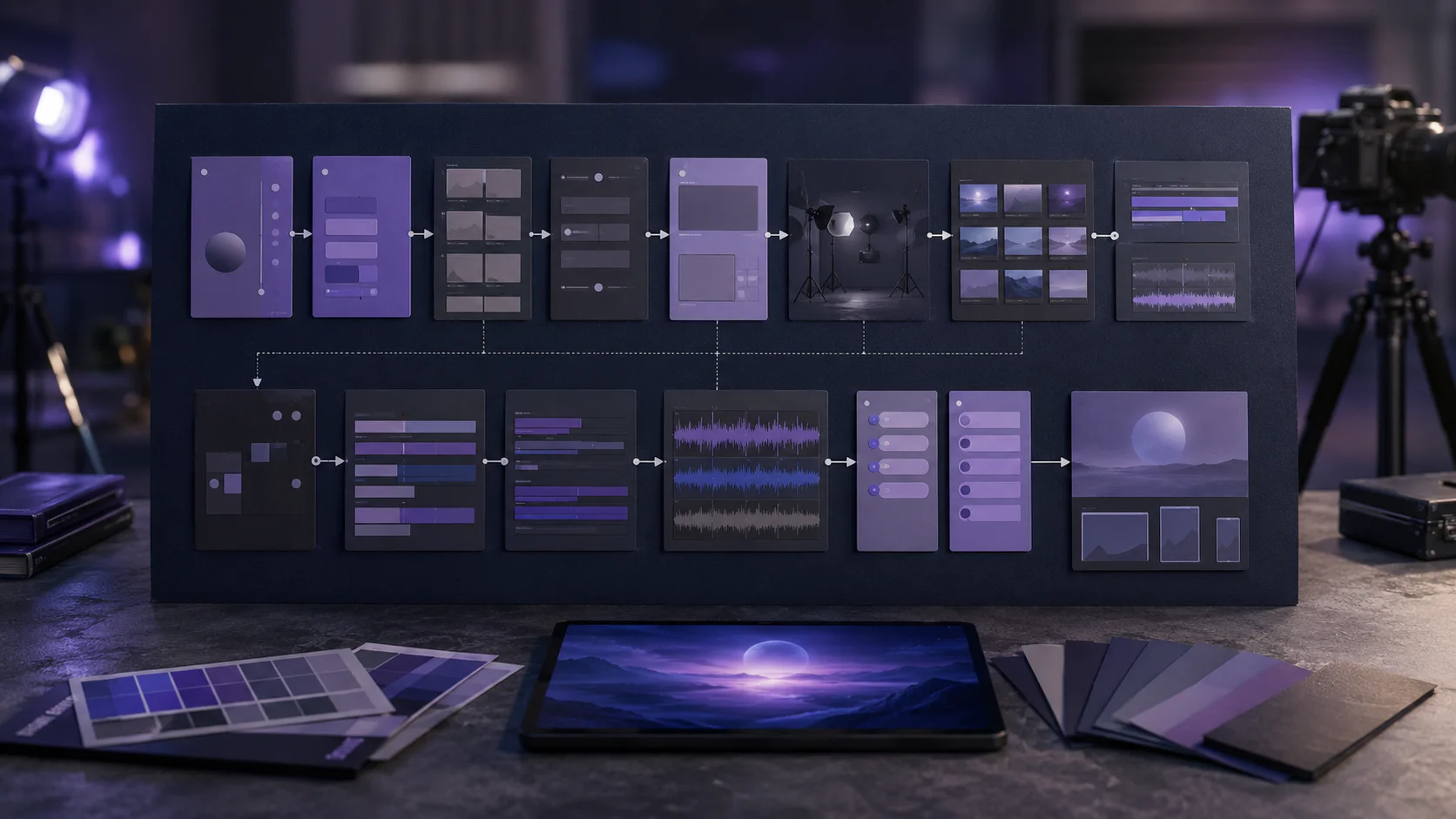
and it rushes or runs long The edit is a pipeline Each step feeds the next Six stages in order Footage to colour, sound, delivery Each stage built on the last Part three The takeaway
What it all actually costs A single-day shoot, simple edit runs about RM 8,000 to 12,000 A larger, multi-deliverable project climbs to RM 50,000 to 80,000 The cost on the page Lock decisions before the shoot Quoted budget = paid budget
The brief that lands on an agency producer’s desk in Kuala Lumpur usually arrives in one of two shapes. The first is a marketing director who has signed off on a quote and is now reading the production schedule for the first time, working out how three shoot days, four locations, two language versions, and a hard AGM deadline are supposed to fit inside the eight weeks left on the calendar. The second is a founder who has watched three competitor brand films, fallen in love with a particular drone shot, and now wants to know what that single visual would cost to recreate.
Both briefs share a common gap. The cost on the page hides the work behind it. A corporate video is not a single creative decision; it is around 40 small ones, and the process that decides whether those 40 calls land coherently is the difference between a video that runs at AGM and one that gets reshot at 60 per cent budget after the chair walks out of the rough cut.
One integrated creative agency, headquartered across Kuala Lumpur and Selangor, has been making those calls since 2018: an in-house bench of 40 specialists at Walk Production, working for SMEs, GLCs, Bursa-listed companies, and federal agencies across Malaysia, Singapore, and the wider Asia-Pacific region. The phases, frameworks, regulatory layers, RM cost bands, and case studies below come from that same quarterly body of work.
For the wider digital marketing layer above video, see digital marketing agency guide for Malaysia. For the social media branding layer where shortform vertical cuts live, see social media branding and marketing in Malaysia. For the brand identity layer above video, see brand identity and tone of voice for Malaysian companies.
What corporate video production actually means
Corporate video production is the full process of building professional video content for a business purpose, from the first brief through to the final MP4 in the marketing team’s content library. Work splits into three phases: pre-production, production, and post-production. Each phase has a fixed set of deliverables, and skipping or rushing any one of them produces the cost blowouts you read about in agency-vs-client horror stories.
Production day is the photogenic part: cameras, lighting, talent in the chair. Pre-production is paperwork (treatment, script, storyboard, call sheet, location release, permit applications). Post-production is hours of editor time. Production day is the smallest of the three phases by working hours, even though it sits at the centre of the schedule and absorbs the largest single line item in the quote.
In our agency experience, the briefs that drift most often share one pattern: the production budget is approved before the deliverable is defined. A 90-second 16:9 brand film for the website hero and a 30-second 9:16 cut for LinkedIn from the same shoot are not the same project as a single 60-second master cropped to vertical in post. The first is two designed deliverables planned together; the second is one deliverable repurposed and usually fails the platform it was not designed for. Decide the deliverables before the quote.
The format mix and what each one is for
The format dictates everything downstream, so decide before you quote. Most Malaysian briefs sit inside one of nine working formats, and the right pick is set by the business question the video is answering.
- Corporate profile. Two to five-minute company overview for the website hero, investor decks, and the front of pitches.
- Brand film. Longer hero piece (60 to 180 seconds) that runs once and works for two years. AGM playback, investor day, anniversary moment.
- Explainer. A 60 to 90-second short film that takes one idea and makes it land. One product, one process, one policy.
- Motion graphics. Fully animated work using typography, icons, charts, and illustration. The right format for results, AGM recap, onboarding policy, regulatory disclosure, and festive cultural pieces.
- Product and demo. Tight shotlists and macro-led cinematography for e-commerce, trade-show looping, and sales decks.
- Testimonial and interview. Single or two-camera setups built around a real client speaking to camera. The right format when trust is the bottleneck.
- Event coverage and montage. Multi-camera shoots, edited fast. The right format when a single event needs to produce a year of assets.
- Training and onboarding. Controlled-environment shoots prioritising clarity over cinema. HR modules, PDPA refreshers, anti-corruption training, safety briefings.
- Social media video. Vertical 9:16 cuts for Reels and TikTok, square 1:1 for in-feed, short-form 16:9 for paid YouTube and LinkedIn. Plan the shoot to crop into all three from the same shoot day; retrofitting platform cuts after master lock costs roughly 30 to 50 per cent of base in extra edit time. For the social media branding system underneath these cuts, see our social media branding playbook.
These formats often combine in a single engagement. A Bursa-listed annual report video might layer motion graphics on top of a filmed chair address. A B2B brand campaign might pair a 90-second hero with three testimonial cut-downs and six social shorts from one shoot week. The right brief names the format mix at week one, before the kit is booked against a single-format quote.
Pre-production: the phase that decides the shoot day
This is where the project takes shape. Skip planning and you pay for it three times over on set: in lost shoot hours, in unrecoverable footage, and in edit notes that surface decisions the team should have made on paper. Pre-production runs one to four weeks depending on format and scope.
Discovery and creative brief
We start with a discovery call. Business objective. Target audience in concrete terms (not “stakeholders”: “procurement directors at Malaysian banks”, or “Bursa-listed company secretaries reviewing the annual report cycle”). The three messages that must land. Distribution channels and the runtime, aspect ratio, and sound-on or sound-off assumption each one carries. Brand guidelines, voice, and tone-of-voice rules. The approval chain, and crucially, the single decision-maker with final word.
The output is a creative brief, the document every later decision references. If something is not in the brief, we have to negotiate it back in, and that negotiation produces the “small additions” that bloat scope by 30 per cent through pre-production.
Treatment, concept, and script
The treatment describes the visual idea, story arc, tone, and reference frame. The concept narrows it to a specific creative direction. The script translates that into spoken lines, on-screen text, and visual cues. For interview-led pieces, the “script” is a question guide; you cannot script an authentic answer.
Most Malaysian corporate videos run two to four minutes. Beyond four, attention drops sharply outside specific contexts (annual report videos for Bursa-listed companies, AGM and EGM playback, training modules where the audience is captive). Plan bilingual or trilingual versions early. Each new language version is closer to 60 per cent of the base cost than to 30, once translation, voice-over recording, and subtitle pacing are added.
Storyboard, shot list, and visual planning
The storyboard maps every shot in a narrative cut. Interview videos can run on a shot list rather than a full board; a brand film with motion graphics or talent direction needs the full board so the animator and the cinematographer agree on framing before the camera turns on.
The storyboard is where revision rounds get consumed cheaply. A change on the board is a few hours of designer time. The same change after the offline edit is locked is a re-shoot or a re-grade.
Location scouting, permits, and clearances
We physically visit every location to check lighting, noise, power, visual suitability, and load-in access. Drone and public-space filming engage the Civil Aviation Authority of Malaysia and other authorities depending on the airspace and the structure. Permit lead time is real: per CAAM’s current UAS guidance, applications should be submitted at least 14 working days before the activity, longer for restricted airspace or temporary processing windows.
For broadcast-bound work, the clearance layer depends on the channel. A TVC or public-exhibition piece may require broadcaster review, Lembaga Penapis Filem (LPF) film censorship approval under the Ministry of Home Affairs, and review under the MCMC Content Code depending on use. Publicity material may also require LPF publicity material censorship. For film and video production licensing, the National Film Development Corporation Malaysia (FINAS) regime applies under the Finas Act 1981. Licensing scope and exemptions for corporate, advertising, and online video change over time, so confirm current FINAS requirements with your production partner at the brief stage rather than assume an industry default.
Talent, releases, and PDPA
If employees, customers, or hired talent appear on camera, signed releases are required. Under Malaysia’s Personal Data Protection Act 2010, as amended by Act A1727 in 2024, on-camera footage of identifiable individuals is personal data. The release should cover usage scope, distribution windows, retention period, the right to withdraw consent, and the data-handling chain after the production wraps.
For talent buy-out structures, the buy-out scales with territory and duration. A six-month Malaysia buy-out for a mid-tier model adds RM 3,500 to RM 5,500 on top of the day rate; one-year regional with broadcast rights runs higher. Confirm the structure in writing before the shoot.
Pre-production closes with a signed-off script, approved storyboard or shot list, locked schedule, confirmed talent and locations, signed releases, and a documented approval chain. Anything outside that set is scope creep.
Script structure for 60-second and three-minute runtimes
Most Malaysian corporate scripts fail for the same reason: the founder is the protagonist instead of the audience. The script opens with the company logo, the founding year, the values pillar, the CEO’s vision. By second 12 the viewer is gone. The fix is uncomfortable but simple: write the script for the person watching, not for the person paying.
The script structures we use sit around two working runtimes, the 90-second corporate piece and the three-minute flagship.
The 90-second script structure
Ninety seconds is the workhorse runtime for B2B corporate video in Malaysia. Seven beats hold the structure together.
- 0 to 5 seconds, visual hook. Open on the operating reality: a control-room screen, a forklift moving stock, an auditor flipping a report.
- 5 to 15 seconds, audience problem in plain language. Name the thing the viewer is dealing with, in the words they would use. Swap “compliance complexity” for “the auditor is on-site Thursday and the file is not ready”.
- 15 to 30 seconds, who you are, in one sentence. Company name first appears here. What you do, who you do it for. No tagline, no founding-year.
- 30 to 50 seconds, how you solve it. One or two concrete things you do. Show them happening.
- 50 to 70 seconds, a named outcome or named client. With permission, name a client and the result.
- 70 to 85 seconds, where you operate. Locations, plants, footprint. One number, one map, one line of voice-over.
- 85 to 90 seconds, clear call to action with a URL. Imperative verb, present tense, full URL on screen.
Word count discipline at 90 seconds is roughly 190 to 225 words of voice-over at 125 to 150 words per minute. Always count words and add time for visual-only moments and transitions.
The three-minute flagship structure
A three-minute flagship is the film commissioned once and used for two years: investor decks, AGMs, trade-show loops, the chairman’s keynote. It earns more time on screen, but only if every minute pays its rent.
- Open (15 seconds). A single visual statement of who you are at scale. No voice-over for the first five seconds; music carries it.
- Problem (30 seconds). The world the company exists to serve, framed as a real-world tension. Two beats, no more.
- Approach (45 seconds). The operating model. How the work actually gets done. Keep it to verbs.
- Proof (60 seconds). The longest section by design. Three named projects or three named outcomes, each with its own visual sequence and voice-over line. The section the buyer rewatches.
- Where we operate (30 seconds). Geography and scale signal. Branch map, headcount, key certifications.
- Close (15 seconds). The line you want the audience to leave with, plus the call-to-action card.
Word-count discipline at three minutes is 375 to 450 words of voice-over. Anything more and the edit will fight you on every cut.
Specific scripting calls
Open with action. One idea per cut: if a line on the page contains two ideas, the editor has to find a transition that does not exist in the footage. Voice-over written for the ear, in short single-clause sentences read aloud at the writing desk. Subtitle-aware line lengths: a Bahasa Malaysia subtitle runs 15 to 25 per cent longer than its English equivalent on the work we deliver, so write the English short enough that the BM line still breaks cleanly on mobile.
Explainer video and when animation beats live-action
An explainer video is a short film, usually 60 to 90 seconds, that takes one idea and makes it land. One product, one process, one policy. The discipline is subtractive. Every frame either moves the viewer closer to understanding or it goes. Strip out the disclaimers, the corporate history, the four sub-products. Leave one job for the video to do. Everything else lives on the landing page underneath.
The choice between animation and live-action is usually obvious once you ask one question: can a camera show the thing? For Walk Production’s MSIG festive video series, the answer was no. Emotional warmth across four cultural celebrations plus a consistent brand thread would have meant four sets, four casts, four wardrobe rounds in live-action; custom illustration delivered the same emotional read at a fraction of the cost. For PKCT, the answer was yes; you cannot animate a real cruise terminal into the frame and have it feel credible. For Raya Airways, the answer was both: live-action for cargo operations, motion graphics for route data and regional reach.
Five working explainer formats cover most Malaysian briefs.
- 2D motion graphics. Illustrated icons, animated text, a clear voice-over. The workhorse for fintech onboarding flows, SaaS feature launches, and anything where the “thing” is software or a process diagram.
- Live-action. Real people, real places. The right format when trust is the bottleneck, when the brand is the thing being sold, or when the location is half the story.
- Mixed live-action with motion graphics. Real footage of the operation with animated overlays for data, callouts, and process diagrams. The most common B2B request and the right answer for industrial, energy, aviation, and infrastructure brands.
- Motion-graphic montage. A key visual or campaign identity reinforced through short rhythmic lines that sync to specific visuals rather than carry exposition. The right answer for programme summaries and event recap pieces with a campaign architecture to defend.
- Pure illustration-led festive or seasonal pieces. Custom illustration for cultural occasions where stock imagery would make the brand look indistinguishable from every other Malaysian company posting Raya content.
A 90-second explainer script is 150 to 200 words. That is shorter than a single LinkedIn post. If the first draft is 320 words, cut it before sending for approval. The cuts hurt; do them anyway. Open on the actual frustration in the words the viewer would use. Replace adjectives with verbs. Pick one call to action.
Motion graphics for corporate use
Corporate motion graphics in Malaysia have moved past the “explainer cartoon” era. They now sit at the heart of how organisations turn dense information, quarterly results, AGM commentary, onboarding policy, regulatory disclosure, into something a recipient will actually finish watching.
A typical brief sounds like “the analyst pack is forty pages, the chair wants a 90-second recap before Q&A”, or “HR has a new anti-corruption module and nobody finishes the slide deck”, or “Hari Raya is in six weeks and the holding-company logo card we ran last year felt thin”. Each is a motion graphics problem with a different answer.
Five working buckets cover most corporate motion graphics work. The buckets look similar from the outside but carry different success criteria, revision cycles, and production economics.
Quarterly results and financial highlights. For Bursa-listed companies disclosing to shareholders, motion graphics translate the numbers that analyst PDFs hide behind: revenue waterfalls that build chart-by-chart, segment splits resolving on screen, year-on-year comparisons the viewer watches construct rather than squint at. The piece runs on the IR page, plays at the analyst briefing, and gets cut down for the LinkedIn results post. Success is measured on clarity.
AGM and EGM playback. The shareholder Q&A pack increasingly opens with a narrated visual recap rather than a slide read-out. Two to three minutes covering the year, the strategic commentary, and the forward-looking points the chair wants to anchor.
Onboarding and policy. HR, PDPA, and anti-corruption modules used to be PowerPoint decks nobody finished. The new format is a 60 to 90-second motion graphics explainer a new joiner can rewatch on their own time. The message is identical for every cohort, completion rates rise, and the script is approved once and frozen.
Product and capability. Short B2B explainers for sales decks, RFP cover videos, and capability statements. Typically 30 to 60 seconds, focused on a single proposition, designed to drop into a presentation without context.
Festive and CSR cultural moments. The annual rhythm for retail-facing brands. Hari Raya, Chinese New Year, Deepavali, Christmas, Merdeka. Six weeks of lead time is the realistic minimum for a piece that needs cultural review, voice-over, and multi-platform cuts.
Walk Production’s MSIG festive video series sits in this fifth category. Each video began with a key visual establishing the cultural occasion, distinct colour palettes and motifs reflecting each celebration, and a recognisable MSIG thread maintained across the set. Original artwork replaced generic stock imagery; motion graphic animation brought the illustrations to life with pacing calibrated for social viewing across digital platforms. The general production logic is consistent for festive cultural pieces: a brand-anchored visual system that holds across multiple occasions, narrative pacing tuned for the platform, and deliverables planned for the channels the brand actually publishes on.
For the upstream brand identity layer that the motion language translates, see brand identity and tone of voice for Malaysian companies.
Product video for e-commerce
Product video in Malaysian e-commerce is no longer a “nice-to-have”. On a five-inch screen, motion wins the thumb every time, and the gap between a flat photo and a six-second product video is the gap between “saved for later” and “added to cart”.
Almost every product video brief collapses into one of two archetypes.
The conversion video (6 to 15 seconds) lives on the product detail page or inside a shoppable post. One product, one benefit, one call to action. No brand intro, no logo sting, no story arc. The first frame is the product in use; the last frame is the price or the delivery promise. If the conversion cut has three messages, it has zero.
The catalogue video (30 to 60 seconds) lives on the brand page, the campaign landing page, or a category banner. Its job is range overview: show the breadth, lead with a hero SKU, and let the supporting cast prove there is more to come.
Treat the two as separate productions even when shot the same day. They share lighting and crew but carry separate scripts.
Plus four alternative-angle pickup shots: insurance for the editor that costs almost nothing on the day and saves the entire edit when one master frame does not cut.
Platform specs matter. Shopee listings require MP4 in H.264, 10 to 60 seconds, minimum 720p, with 1:1 the recommended aspect ratio for listings and 9:16 for Shopee Feed. TikTok Shop supports 5 to 60 seconds and tends to reward 9 to 15-second product cuts that feel native rather than advertorial. Confirm current platform specs before locking the export list; marketplace requirements change quarterly. A well-planned shoot day produces multiple platform masters from the same lighting and crew setup, and per-asset cost drops sharply once the brief crosses 15 SKUs in one batch.
Testimonial video: the format that closes late-stage deals
A written case study answers half of “have you done this for someone like us?”. A list of logos answers a quarter. A two-minute video of a real client describing the project, in their own words, on camera, in the same accent as the prospect, answers the rest.
People trust people. In late-stage B2B sales, testimonial video is consistently rated by sales teams among the most effective formats for moving a stalled deal forward, often ahead of written case studies. The format earns its budget when sales teams actively use it: in live pitches, in stalled-account outreach, in candidate-recruitment emails. The single biggest mistake brands make is treating the testimonial as a marketing asset and stopping there.
Not every satisfied client makes a strong testimonial subject. Look for clients who have a clear before-and-after story and can name specific outcomes. Personality matters as much as substance; conduct a short pre-screening call before committing to a filming date to gauge how the interviewee communicates on camera.
Brief the subject ahead of the shoot. Share questions a few days in advance so they can think through their experiences without scripting exact answers. The goal is preparation; the answers should still sound unrehearsed. Explain where the video will appear, the time commitment, and the approval step before publication.
Build the interview around a narrative arc: the situation before working together, the specific problem that needed solving, why they chose this approach, what surprised them most about the process, what results they have seen, and what they would say to someone considering a similar engagement. Coach subjects to answer in full sentences (“what impressed me most was the turnaround time” rather than “the turnaround”), because the interviewer’s question is removed during editing.
Filming setup matters more than gear list. Three-point lighting (key at 45 degrees, fill on the opposite side, back light to separate the subject from the background). Lavalier microphones plus a boom for redundancy, never the camera’s built-in microphone. Medium close-up framing, head and shoulders, shot at minimum 1080p. Film in the subject’s own environment whenever possible; an office or workspace adds contextual credibility a generic studio backdrop cannot.
A testimonial master runs one to two minutes, with 30 to 45-second cuts for social and sales-deck use. Trim rambling sections, but preserve natural pauses and speech patterns; heavy-handed editing removes the humanity that makes the format credible. Lower-thirds identify the speaker by name, title, and company. Burned-in subtitles handle silent-feed playback. Build at least two revision rounds into post so the subject can confirm accuracy before publication.
Event video production and the MICE recap
Walk into the post-mortem of most Malaysian corporate conferences and you find the same blank space. A six-figure annual event runs, the speeches land, the photographer files a folder of stills, and within a fortnight the whole thing has effectively disappeared. The brands getting the strongest return on their events are the ones who walk into the venue with a clear plan for what footage gets captured and how it gets cut afterwards.
A well-filmed conference yields keynote highlight clips for LinkedIn, a 90-second recap for email campaigns, testimonial snippets for sales decks, full session recordings for on-demand libraries, and short teaser cuts that promote next year’s edition. Each one would cost real money to produce in isolation. Captured together in one shoot, the per-asset cost falls sharply. The cheapest event video is the one planned for repurposing before the crew is booked.
Five working event-video formats cover most Malaysian briefs.
- Highlight reel. Fast-paced montages running 30 seconds to two minutes. Pulls the strongest moments together for social media sharing and post-event promotion.
- Full session recordings. One to two-hour captures of keynotes, panels, and sessions for on-demand libraries and training. Multi-camera switching between speaker, slides, and audience is standard.
- Same-day edit. A 60 to 90-second cut assembled on-site and published while the event is still live. Requires a dedicated editor working with proxy media and a tight handoff workflow.
- Recap and summary. Post-event narrative running one to five minutes that blends highlights with speaker insights, attendee interviews, and behind-the-scenes footage. The asset that supports year-round marketing and the next-edition promotion.
- Testimonial capture. Short on-camera interviews with attendees, speakers, or sponsors recorded during or immediately after the event. The asset that supports next-year registration and sales prospecting.
Walk Production’s MyCEB MyTripleE 2.0 montage is one published example of the format. The MyTripleE programme sits within the broader “Meet in Malaysia” campaign promoting Malaysia as a destination for international business events. The brief was a montage video that distilled the programme’s three pillars and event highlights into a single promotional piece tied to the campaign identity. The discipline that made the cut work was structural: a key visual designed alongside the video so the asset extended across video, print, and digital; short rhythmic script lines synchronised to specific visual sequences rather than carrying heavy exposition; and motion graphics that introduced programme branding and animated typography to reinforce key messages between event-footage segments.
Pre-production for an event shoot is where most problems are prevented. Visit the venue at least two weeks before the event to assess lighting, ceiling height, acoustics, power outlets, and load-in access. Build a prioritised shot list against the agenda by time, location, and priority. Schedule a pre-production meeting one to two weeks out covering speaker topics, restricted areas, and the venue’s sound feed for backup audio. Test all gear 24 to 48 hours before the event.
Crew size scales with event scale. Small events under 100 guests in a single room run two to three crew. Medium events of 100 to 500 guests across multiple rooms run four to six. Large multi-stage events of 500-plus run eight to twelve or more, including multiple camera operators, audio and lighting technicians, a gimbal operator, a producer, and an aerial operator where the venue permits drone work.
For hybrid events combining a physical audience with remote participants, wired ethernet is strongly preferred over WiFi. A hardware encoder gives more reliable output than software-only setups for events where dropped frames are not acceptable.
Production day: crew, kit, and the discipline that saves it
Filming runs one to five days for most corporate work. A single-day corporate profile shoot is 8 to 10 hours on the ground, including setup, principal photography, B-roll, and teardown.
Crew arrives 60 to 90 minutes before the first scheduled shot. The camera package covers principal action (an A-cam) plus secondary coverage (a B-cam scavenging cutaways). Lighting kit handles key, fill, and back-light setups across the locations on the day. Lavalier microphones plus a backup boom run on parallel tracks. Specialist gear (gimbals, sliders, drones) is briefed and bracketed into specific scenes. Setup eats one to three hours and needs its own slot in the schedule.
The director runs the floor: guides talent through the script, watches for natural delivery, calls retakes, and makes live calls on framing and pacing. For Raya Airways, the cinematography mixed documentary-style operational footage (aircraft on the tarmac, cargo handling, crew at work) with brand sequences shot specifically for the corporate cut. The director’s job was to keep both sets of footage on the same visual standard.
Alongside main shots, we capture B-roll, the cutaways the editor uses to break up talking-head footage. Good B-roll is the difference between a video that flows and one that drags. Audio runs on lavaliers plus a backup boom; voice-over narration is almost always recorded later in a studio because on-set audio cannot match a controlled booth.
Three working disciplines decide whether the day delivers.
Locked shotlist. No additions on the day. If a new shot is requested on set, it is logged for a pickup day. Adding one unbriefed shot costs the next two on the list.
Single decision-maker on set. One person from the client side has final word on takes, framing, and approvals. Three approvers means three opinions and zero decisions. Name the person on the call sheet before the shoot day.
Dailies-by-EOD review. Proxies of every take go to the client before the crew leaves the studio. If a re-shoot is needed, it is flagged that night and slotted in the next morning. All footage is backed up to two drives before the crew leaves site.
The production manager reviews footage against the shot list throughout the day, catching missing shots while the lights are still up. That single discipline, a named on-set client approver and a checked shotlist, saves more shoot days than any creative talent ever has.
Post-production: the six-stage edit pipeline
Post-production transforms raw footage into the finished video. Post runs one to four weeks for most corporate work, longer for flagship campaigns with heavy motion graphics or multilingual deliverables. This is where most clients underestimate the time needed. The six-stage pipeline below is the working sequence we run on every corporate engagement.
Stage 1: Footage review and organisation
Editors import all raw footage and organise files by scene, speaker, or topic. Clips are labelled, audio synced to video, strongest takes flagged. Half a day to a full day for most corporate shoots. Multi-camera angles get grouped; separately recorded audio gets synced here.
Stage 2: Assembly edit
The assembly arranges selected footage into a rough sequence. Clips appear in the intended order but nothing is trimmed to precision yet. The assembly is often twice the final length, and the editor focuses on structure: are the right people saying the right things in the right order? The assembly may go to the client for early structural review.
Stage 3: Fine cut
The fine cut is where pacing and visual storytelling come together. Each clip is trimmed to its ideal length, transitions are added, and B-roll layers in to support the narrative. The stage also locks the video structure; after the fine cut is approved, major sequence changes become costly. The goal is “picture lock”, the point where the visual edit is final and colour and audio work can begin.
Stage 4: Colour correction and grading
Correction matches exposure and white balance across footage so clips from different cameras, lighting setups, and locations look consistent. Grading applies the creative look. Corporate edits are typically delivered in Rec. 709 at 8-bit for web and SDR broadcast. For HDR-capable client-facing screens (premium presentations, broadcast TVCs), grades target HDR10 or Dolby Vision in Rec. 2020 at 10-bit using PQ or HLG transfer functions. Re-grading after final is one of the most expensive change requests on the menu.
Stage 5: Audio mixing and sound design
Three audio layers balance against each other: dialogue or voice-over, background music, and sound effects. Background noise is cleaned up, hums are removed, equalisation makes every word clear. YouTube, LinkedIn, and broadcast each have different loudness standards; professional audio mixing accounts for these so the video sounds consistent wherever it is viewed. For bilingual videos, both voice-over tracks sit on parallel timelines, each cut to match the visuals.
Stage 6: Graphics, subtitles, and final delivery
Titles, lower-thirds, motion graphic overlays, animated infographics, and transition animations are added at this stage. For Raya Airways, motion graphics carried route maps, capacity figures, and regional reach without forcing the voice-over to recite numbers. Default to delivering subtitles, since most social feed views are sound-off.
Final export covers MP4 in H.264 for web and social, MOV or ProRes 422 for broadcast or archival masters, and platform-specific cuts in 16:9, 9:16, and 1:1. A single corporate project often needs four or five exports. Subtitle files in SRT format are delivered alongside burned-in caption versions when captioning is in scope.
Revision rounds
Most professional packages include two to four revision rounds depending on tier. Round one (after assembly) addresses structural concerns: narrative flow, segment inclusion, pacing. Round two (after fine cut) focuses on detail: transitions, B-roll choices, colour, audio levels, branded-element compliance. Round three (final review) covers minor tweaks only: a typo in a lower-third, a small timing or audio level change. Going beyond the included rounds typically costs RM 1,500 to RM 3,500 per round.
The largest cause of revision creep is no internal sign-off authority. Decide who has final approval before kickoff.
RM cost bands by tier
Corporate video pricing in Malaysia varies by format, shoot days, crew size, talent, post-production scope, and the number of platform deliverables. The bands below cover the working KL and Klang Valley market in 2026. Penang, JB, and East Malaysia shoots add travel, per diems, and accommodation per crew head, which can shift the total by 15 to 25 per cent on multi-day shoots.
Day-rate maths is worth understanding so you can read a quote properly. KL and Klang Valley 2026 ranges cluster as follows: director RM 2,500 to RM 5,500; director of photography RM 2,000 to RM 4,500; camera second unit RM 1,200 to RM 2,500; sound recordist RM 1,200 to RM 2,200; gaffer plus lighting kit RM 1,800 to RM 4,000; first AD RM 1,200 to RM 2,000; production manager RM 1,500 to RM 2,800; producer RM 2,500 to RM 5,000. Non-celebrity talent RM 800 to RM 3,500 per shoot day; celebrity talent RM 8,000 and up with significant variation by profile and buy-out. Location fee RM 1,500 to RM 25,000 depending on venue. Camera kit hire (RED or ARRI body with lenses) RM 3,500 to RM 9,000 per day. Drone with a CAAM-recognised pilot RM 2,500 to RM 5,500 per day.
A typical single-day corporate shoot with a six to seven-person crew and modest kit lands at roughly RM 8,000 to RM 12,000 in day-rate spend alone, before pre-production, post, music licensing, or talent buy-out is added. If a quote does not reconcile to roughly that band, it is reasonable to ask why.
Format-specific working ranges sit inside the three tiers. Testimonial pieces typically run RM 3,000 to RM 15,000. Corporate profile and brand films run RM 8,000 to RM 30,000 and up. 2D animated explainers typically sit at RM 6,000 to RM 18,000, with 3D or character-led animation higher. Event coverage runs RM 3,000 to RM 15,000 for single-day single-camera setups, rising to RM 15,000 to RM 30,000 for multi-day multi-camera events with livestream. Commercial advertisements (30 to 60 seconds) requiring talent, art direction, and cinema-quality post run RM 15,000 to RM 50,000.
Music licensing is a separate line item that surprises first-time clients. Royalty-free library tracks (Epidemic Sound, Artlist, MusicBed and similar) carry per-platform licensing terms that vary by usage scope; confirm the licence covers paid distribution, not just organic posting, before locking the soundtrack. Sync rights for recognisable commercial tracks run into the five figures. Custom-composed music for a flagship sits at RM 6,000 to RM 18,000 and gives a clean licence in perpetuity. For Malaysian music rights specifically, three collective management organisations cover most rights administration: MACP for composers, authors, and publishers; PPM for recording producers; and RPM for recording performers. For commercial work using Malaysian-published music, confirm the licensing chain with your production partner before publication.
For the broader retainer-vs-project economics across creative services including video, see our design retainer in Malaysia practitioner guide.
The Malaysian regulatory frame
Five regulatory and licensing layers shape any serious corporate video engagement in Malaysia. Skipping them creates compliance risk and the kind of mid-flight project pull that wipes out a campaign window. The layers do different work, and conflating them is one of the more common compliance mistakes we see in Malaysian briefs.
FINAS for film and video production licensing. The National Film Development Corporation Malaysia regulates film and video production, distribution, and exhibition under the Finas Act 1981. Licensing scope and exemptions for corporate, advertising, and online-only video work change over time and the public guidance is updated periodically. The practical rule is to confirm current FINAS requirements at the brief stage with your production partner rather than assume an industry default.
CAAM for commercial drone operations. The Civil Aviation Authority of Malaysia regulates commercial Unmanned Aircraft Systems work. Commercial drone use typically requires operator registration and an Unmanned Aircraft System Activity Permit, with restricted-airspace zones carrying additional restrictions. Per CAAM’s current UAS guidance, applications should be submitted at least 14 working days before the activity, longer for restricted airspace or temporary processing windows. Refusals do happen.
Broadcast and content-code clearance for TVC and public exhibition. The clearance layer depends on how the cut is published. A TVC or public-exhibition piece may require broadcaster review, Lembaga Penapis Filem (LPF) film censorship approval under the Ministry of Home Affairs, publicity material censorship for related promotional material, and review against the MCMC Content Code under the Communications and Multimedia Act 1998. The Malaysian Communications and Multimedia Commission sits across content standards and licensed communications and broadcasting rather than as a single film-clearance body. Online-only and YouTube cuts generally sit outside the LPF censorship regime, but if a film starts online and later becomes a TVC or moves to licensed broadcast, the clearance steps apply at that point. Build a regulatory review window into any broadcast-bound schedule and confirm the specific clearance chain (broadcaster, LPF, content code) with your production partner at the brief stage.
PDPA 2010 as amended by Act A1727 (2024). Any on-camera footage of identifiable individuals is personal data under the Department of Personal Data Protection (JPDP) framework. Talent and customer releases need to cover usage scope, distribution duration, retention period, the right to withdraw consent, and the data-handling chain. The CRM hand-off matters too: any lead-gen forms generated from video distribution must move into a system that respects PDPA.
Sector regulators for financial, capital-market, and health content. Bank Negara Malaysia supervises banking, insurance, and takaful promotion. The Securities Commission Malaysia is the stronger authority for capital-market products, investment promotion, finfluencer guidance, and unauthorised capital-market advertising. Risk warnings, return claims, product names, and disclosure language need to be drafted with the compliance read in mind before recording; a re-record because of one missing line is a five-figure mistake. For health content, the Ministry of Health and its Medicine Advertisements Board (MAB) regulate advertising for registered medicinal products, supplements, OTC and traditional medicines, healthcare facilities and services, and the defined list of prohibited medical claims; the KKLIU pre-approval framework applies to most regulated medicinal advertising. For halal-positioned brands, JAKIM considerations apply to visual choices (set dressing, food preparation, co-located non-halal references, ambiguous staging).
A capable agency builds clearance time into the production calendar from week one. The agencies that treat compliance as an afterthought are the ones whose campaigns get pulled mid-flight. Where any one of the layers above is non-trivial for a brand (regulated finance, healthcare, halal-positioned, broadcast-bound), the right discipline is a written pre-publish review step on every deliverable.
Selected Walk Production video work
Four projects show how the disciplines above translate into different Malaysian sectors: MSIG Insurance, Port Klang Cruise Terminal, the Malaysia Convention & Exhibition Bureau, and Raya Airways. Each is written up in full in our company profile video guide, and the wider set sits in our video portfolio.
Common video production mistakes
Five mistakes show up across most of the second-round conversations we have with Malaysian companies. Each one is recoverable, but each one is more expensive than the discipline that would have prevented it.
Skipping pre-production to “save time”. The script gets rushed, the storyboard gets skipped, the permit goes unfiled, and the production day produces chaotic decisions that get unwound in the edit suite at three to five times the cost. Pre-production is the cheapest phase. Spend the approval rounds there.
Unclear approval authority. If three people can approve but none has final sign-off, the project stalls every cycle. The timeline drifts by a week per round of “let me check with the team”. Name the single decision-maker on the call sheet before kickoff.
Late scope changes. A new interview subject after the schedule is locked resets crew availability, rebooks equipment, and reshapes the post-production estimate. Flag the cost of every late addition in writing before it lands in the brief.
Uncoordinated feedback. Contradictory notes from multiple stakeholders force the editor to guess. One consolidated document per round, with timecoded references, every time.
Ignoring distribution requirements at brief stage. A 16:9 shoot does not crop cleanly to 9:16 without losing half the frame. Decide the platform mix at brief stage and shoot with vertical and square reframes in mind. Retrofitting platform cuts after master lock costs roughly 30 to 50 per cent of base in extra edit time.
A sixth, related mistake: under-budgeting permit and clearance lead time. CAAM drone permits (at least 14 working days), FINAS confirmation, broadcaster and LPF clearance plus MCMC Content Code review for broadcast-bound TVC and public-exhibition cuts, BNM or SC compliance review, JAKIM-aware visual checks for halal-positioned brands; each one has a real lead time, and the agencies that treat them as an afterthought are the ones whose campaigns get pulled mid-flight. Build the clearance windows into week one of pre-production.
Where to start
If the brand book is strong and the video output is drifting, the fix is usually a structured engagement rather than a single video commission. That engagement maps the format mix to the year’s calendar, sequences shoot days so per-asset cost falls, builds the script and storyboard discipline into the workflow, and ties the editorial pipeline to a measurement framework the business can report against.
The first conversation is usually a 60-minute scoping call covering the format mix, the priority deliverables, the budget range, any regulated-category considerations, and the approval chain. The first 30 days of any new Walk Production engagement follow the same shape: week one access handover (brand guidelines, prior creative, asset libraries, platform access, permit status); week two baseline audit (existing video performance, audience composition, competitor benchmarking); weeks three to four quick-win execution (lock the next deliverable’s brief, sign off the script, schedule the shoot).
Browse the video portfolio to see how the discipline above translates across maritime (PKCT), aviation (Raya Airways), government MICE (MyCEB), and insurance festive (MSIG). For the deliverable map and format tiers, see corporate video production services. For motion graphics, video editing, sound, colour, and subtitling scope, see video editing services. For the wider digital marketing layer above video, see B2B digital marketing agency services. For the social media branding layer where shortform vertical cuts live, see social media marketing services. For the branding work underneath every video frame, see branding services.
When you are ready, start a conversation with our team.